Two Quid, One Question: A Field Guide to Britain's Charity-Shop Curse Memes
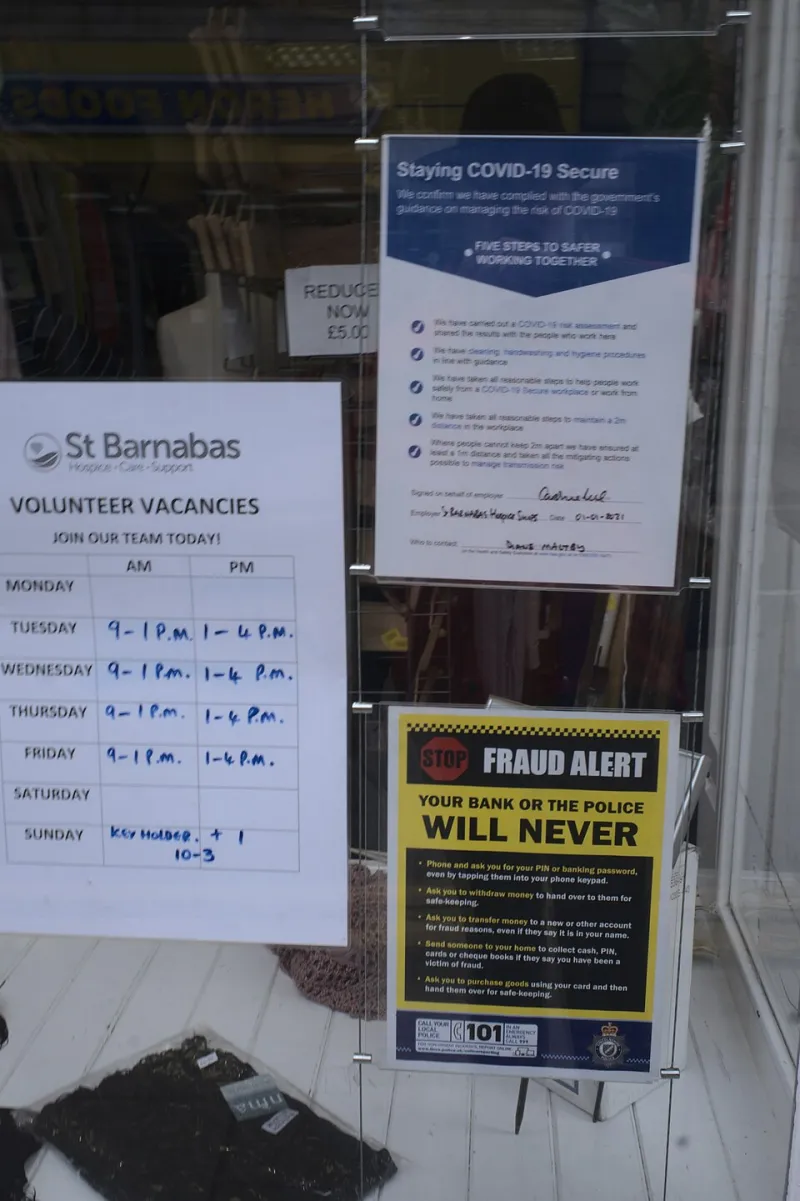
Photo: Bob Harvey , CC BY-SA 2.0, via Wikimedia Commons
Charity shops are not cursed. Most of them are doing a brisk trade in paperback thrillers and slightly haunted-looking teapots while raising money for something useful. But the internet has a way of looking at a shelf of donated ornaments and asking the only question that matters: what is this, and why is it £2.50?
That question is the beating heart of the charity-shop curse meme, a genre that has been quietly thriving in UK group chats for years and shows no signs of packing up its stall in 2026. It is not about mocking thrift. It is about celebrating the glorious randomness of British second-hand culture: the car-boot bargain, the mystery ornament, the DVD box set that smells faintly of someone else's conservatory.
Why the genre works
The appeal is simple. British people love a bargain, but we love a story about a bargain even more. A charity shop find has three built-in ingredients: provenance, price and puzzle. The provenance is unknown. The price is absurdly specific. The puzzle is usually ceramic and staring at you.
The best versions of the meme do not punch down. They are not laughing at volunteers or at people who rely on charity shops. They are laughing at the object: the ornamental hedgehog with a human expression, the framed poem about friendship that has been through three house moves and one divorce, the jigsaw with a missing piece still priced at £3.50. The joke is on the shelf, not the shoppers.
The archetypes, ranked by group-chat reliability
-
The ceramic witness. This is the heavyweight champion. A clown, an owl, a duck in a bonnet, a hedgehog wearing a waistcoat. The object is always slightly too detailed, as if it knows something. The caption writes itself: 'Found this and I think it found me.' Reliable every time.
-
The mug with a confession. 'World's Best Grandad', 'I'm Not Arguing I'm Just Explaining', 'Live Laugh Love' in a font that suggests someone gave up halfway through. The mug is not just a mug. It is a personality test with a handle.
-
The framed print with a typo. There is a specific joy to a motivational quote that has been printed with the word 'success' spelled wrong and then donated without shame. The frame is usually gold. The energy is always 'office kitchen, 2007'.
-
The puzzle problem. A jigsaw of a cottage garden, taped shut, with 'all pieces included' written in biro on the box. The meme is the suspicion. The meme is the missing corner. The meme is the £4.50 price tag for what is essentially a cardboard threat.
-
The car-boot bundle. Not strictly a charity shop, but part of the same ecosystem. A tray of miscellaneous items with a sign saying '50p each or £10 the lot'. The joke is the maths. The joke is also the fact that someone will pay £10 for the lot and then have to carry it home.
-
The obsolete tech relic. A VHS of a fitness video, a Nokia charger, a digital camera with a memory card containing four photos of a car boot. The object is not useful. The object is a time capsule with a price sticker.
-
The suspiciously specific souvenir. A commemorative plate for a town you have never heard of, a tea towel from a wedding that was clearly not yours, a keyring celebrating a local bypass. These are the deep cuts, the ones that make a group chat feel like an archaeological dig.
The £2.50 question
Price is the secret weapon. 'What is this and why is it £2.50?' is funnier than 'what is this and why is it £8?' because £2.50 is the exact amount someone would pay to end an argument. It is the price of a coffee, a bus fare or a small mistake. It says: this object is cheap enough to be an impulse buy and strange enough to require a group chat vote.
Specificity does the rest. 'Ceramic frog with a top hat and one broken eye, 75p' is a story. 'Ornament, £2' is a shrug. The genre rewards the detail: the sticker residue, the handwritten label, the shelf arrangement that looks like a council meeting of the damned.
How to post without being a pillock
There are rules, mostly unspoken. Do not film volunteers without asking. Do not mock the shop itself; it is raising money for a good cause. Do not turn a person into the punchline. Keep it about the object, the price and the beautiful absurdity of British thrift culture. If in doubt, blur the face, keep the frog.
The charity-shop curse meme is comforting because it is low stakes. It does not require a hot take. It just requires a shelf, a sticker and the willingness to ask what exactly is going on with that clown. In 2026, that is enough. The gap between 'bargain' and 'bad idea' is where the fun lives.