The Slip That Launched a Thousand Rants: Britain’s Parcel-Card Meme Economy
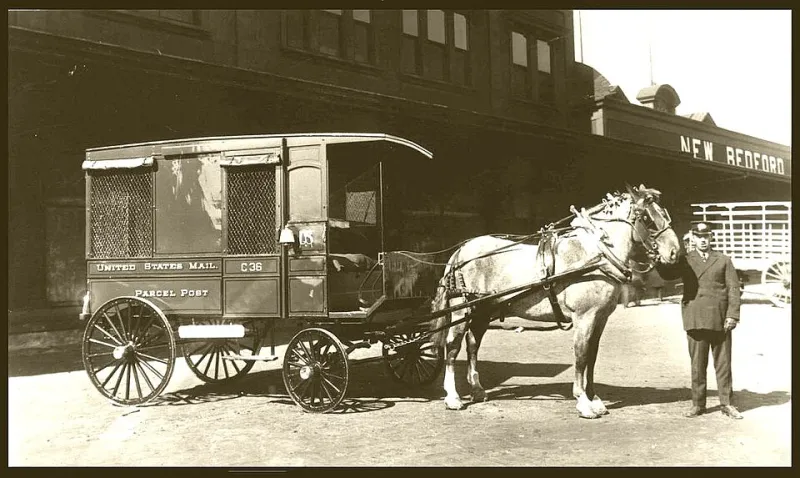
Photo: Unknown photographer; ; Imaging by Gwillhickers, Public domain, via Wikimedia Commons
There is a particular British heartbreak that arrives folded in half and pushed through the letterbox. It is not a bill. It is not a birthday card from an aunt who still thinks you are twelve. It is the delivery slip: the one that begins with the words ‘Sorry we missed you’ and ends with you staring at a tick-box that feels like a personal verdict.
In 2026, that little card has become more than admin. It is a meme format. It is a shared language for anyone who has ever sprinted downstairs in socks, yanked the door open, and found only a van-shaped blur at the end of the road. The slip is the receipt for your disappointment — and, crucially, it is photographable.
A receipt for your absence
The genius of the delivery card is that it is almost a meme template already. It has a headline. It has tick-boxes. It has a villain-free accusation: somebody attempted something, and you were not available. No names, no confrontation, just a small rectangle of institutional disappointment.
That is why it works so well online. A photo of the card needs no caption to be understood. Add one line — ‘I was in, the dog was in, the kettle was in’ — and you have a post. Add doorbell footage of the courier walking briskly past your window and you have a two-act drama. Add the phrase ‘left in a safe place’ and you have a mystery novel with worse pacing.
The card also fits the British mood perfectly. It is polite rage in physical form. It does not shout. It does not swear. It simply informs you that a redelivery can be arranged between 9am and 9:01am on alternate Thursdays at an industrial estate named after a roundabout.
The taxonomy of the slip
Over time, the parcel-card meme has developed recognisable subgenres. Think of them as exhibits in a very small, very annoyed museum.
The Phantom Knock
The classic. The card says an attempt was made. You know, with the certainty of a person who has not moved from the sofa since 7am, that no knock occurred. The meme is usually a close-up of the slip paired with a caption like ‘The doorbell has never felt so gaslit.’ It is not about the parcel. It is about the principle.
The Neighbour Reveal
‘Left with your neighbour’ is not information. It is a plot twist. Which neighbour? The one with the aggressive hanging baskets? The one who communicates exclusively through nods? The one who once borrowed a ladder in 2019 and has been avoiding you ever since? The meme format turns a delivery update into a neighbourhood whodunnit, complete with a cast of characters nobody can legally name.
The Safe Place That Isn’t
Behind the bin. In the porch. With the garden gnome. Under a plant pot that has clearly not been moved since the last ice age. The ‘safe place’ meme is a branch of archaeology: you are handed a clue and asked to reconstruct a courier’s split-second decision-making. The comedy comes from the gap between ‘safe’ and ‘visible from orbit’.
The Depot Pilgrimage
Redelivery is not a service. It is a side quest. The meme version usually features a screenshot of a collection window, a map pin in an industrial estate, and a caption about cancelling your entire Saturday. It is less funny if you have actually done it, which is why it is very funny to everyone else.
The Doorbell Rebuttal
This is the modern upgrade. A delivery card is photographed next to a still from a video doorbell showing the courier arriving, not knocking, taking a photo of your door, and leaving like a man who has just remembered he left the oven on. The split-screen meme is now a staple of group chats and local Facebook groups. It is evidence-based moaning, which is the most British genre of all.
The Unhinged Courier Note
Sometimes the card is replaced by a handwritten note with the energy of a ransom demand: ‘Parcel in blue box.’ There is no blue box. ‘Left with man in van.’ Which man? Which van? The note is not a delivery update; it is a cryptic clue in a treasure hunt designed by someone who hates you.
Why we keep posting the card
The delivery slip meme works because it is low-stakes, widely understood, and endlessly remixable. It does not require a political opinion. It does not require you to name a company, a courier, or a street. It just requires a shared memory of standing in a hallway, holding a piece of cardboard, and feeling slightly ridiculous.
It also lets us perform that most British of rituals: pretending we were in all along. The meme is rarely a genuine complaint. It is a pantomime of inconvenience. We post the card, we caption it, we move on. The parcel may arrive. The joke definitely does.
In a year when online humour often feels like a race to be loudest, the delivery card is refreshingly quiet. It is a small, boring object that has accidentally become a stage. And the best memes, as ever, are the ones where everyone recognises the prop.
So next time you find one on the doormat, do not sigh. Photograph it. Crop out the address. Add a caption about the kettle being in. You may not have received your parcel, but you have received content.